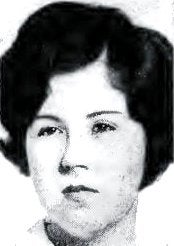
Murder on Christmas Eve

Around noon on Christmas Eve 1963, Alfred Foushee was finishing up some last-minute Christmas shopping in downtown Chapel Hill when he ran into Frank Rinaldi. Alfred had done some general housework for Frank in the late summer and was not excited to see him at all. Rinaldi was with another man, and he hoped that he did not notice him. Still, sure enough, their eyes met before Alfred could make his move to leave the shop without being noticed. When Frank noticed him, he did not greet him or smile. What he said turned Alfred’s blood cold and made him regret seeing him even more than he could have ever imagined. 

            “It is over; I did it,” he said and passed him by with his companion following behind. Alfred stood momentarily stunned, then hurriedly finished his business in the store and went home to spend Christmas with his family. 

            Alfred tried to push down the memories of the time he had spent with Frank Rinaldi. He had been hired to do some general cleaning and work for Frank Rinaldi, and he had been asked back several more times after that first day to do other jobs. It had become progressively more uncomfortable each time he went to his apartment. It had become a nightmare when one day Frank told him he would like to hire him to kill his wife, Lucille. Alfred had never even seen her and was only aware of the existence of a wife because Frank told him he was married. Frank lived in the apartment alone as far as he knew. 

            Alfred refused the offer to murder Frank’s wife, but Frank persisted. As time went by and he realized that Alfred would not do the job himself, he offered him $500 to find him someone else who would do it. Most important, Frank told him, was to find someone that could do it and make it look like an accident. Alfred again refused. The last time he had seen Frank Rinaldi, he had made very aggressive sexual advances towards Alfred, asking him to expose himself to Frank and then offering him money for sex. Alfred had refused, and Frank had apologized and even told him he was ashamed of himself for his actions as Alfred left. It had been the last time he had seen him until that day in the store. 

            Little did Alfred know that as he settled in for his Christmas celebration with his family, across town at Frank Rinaldi’s apartment on 105 North Street, the police were walking through a horrible crime scene they had been called to by Frank Rinaldi’s friend John Sipp. They found 32-year-old Lucille Rinaldi, five months pregnant, brutally beaten in the face and head. She had died in the small living room of the apartment she shared with her husband, Frank. A sock had been stuffed in her mouth and a scarf tied around her head, keeping the hose in her mouth. A blood-covered pillow sat near her on the floor, and the police deduced that she had been smothered with the pillow pressed hard against her face to kill her.

            There was no sign of forced entry, but her pocketbook was opened and the contents strewn on the floor near it. A bent flashlight was found and determined to be the weapon used to bludgeon her. She was not sexually assaulted, although she was in her pajamas and a housecoat, and it seemed nothing was missing.  It seemed a pretty blatant attempt to stage a robbery to the police officers because there were still valuables in the house. Their attention immediately turned to her husband Frank as the prime suspect, and he was arrested. 

            The detectives that investigated the murder found that Frank Rinaldi was an interesting, if not odd, man. He, like his wife, was from Waterbury, Connecticut, where they had met years before. He had graduated from Georgetown University in 1951 and taken a job with the CIA. In 1953, he enlisted in the Army to serve in Korea during the war. In 1956 when he got out of the Army, he moved to Chapel Hill, but left a year later to teach at the University of Missouri. From there, he worked with an advertising firm in New York City. 

            By 1960, he was back in Chapel Hill, where he worked on his Ph.D. and taught English as a graduate assistant. He had been engaged to Lucille in the Spring of 1963, and she had moved to Chapel Hill with him, where she took a job teaching at Guy B Phillips Junior High School. One day at the school in September, she had worked one day when school started but had resigned, citing “extreme personal family trouble.” She moved back to her parents in Waterbury while Frank stayed in Chapel Hill. 

            Although their marriage seemed strained, the police found that Frank had depended upon Lucille financially for some time. She had sent him several checks, sometimes of $200, to support him while he lived in Chapel Hill before they were married. Frank had taken out a $20,000 insurance policy on her naming himself as the beneficiary. Calling himself her fiancé on the application, Frank purchased a life insurance policy with a rider allowing for another $20,000 if her death was accidental. Letters from Frank to Lucille seemed more conciliatory after the policies were bought. He begins to ask her to come back to Chapel Hill.

            Frank had also taken out several loans over the previous few months leading up to the murder of Lucille from the University Loan Fund for students and Carolina Bank Trust Company. The investigators found that he had made inquiries about his rights to any inheritance that Lucille was due in the event of the death of her parents. When the police talked to Alfred Foushee, they felt they had the damning information they needed for the district attorney to get a conviction. 

            Although it seemed that the trial would be little more than a formality, Frank Rinaldi would navigate through two separate trials and be acquitted in both. During the first trial, his lawyers argued that the police had not done a thorough investigation and focused on Rinaldi as a suspect instead of following the investigation process and solving the crime. They felt that it was more likely that a thief had been surprised by Mrs. Rinaldi and had killed her to keep from being implicated in the robbery. Also, in John Sipp’s testimony, he said he had been with Frank all day on their shopping trip. Sipp was a great witness and was able to recall tiny details about their time that day. Sipp and his wife had dined with Frank and Lucille the night before the murder, and Mrs. Sipp testified that she did not see anything indicating any turmoil between the two. 

            Many believed that Frank Rinaldi had escaped justice. It is theorized that he was a homosexual, who at this time would have felt inclined to remain closeted. When Lucille found out about his sexuality, she returned to Connecticut while wondering what she was to do. She was over thirty, newly married, and pregnant. Frank, having been discovered, began to find ways to eliminate Lucille so he could keep his secret and get a financial windfall from the insurance. 

            There is no way to prove this, of course, as so much time has passed. Frank Rinaldi was found not guilty in her death on two separate occasions. Still, doubt remains to this day as there seems to be so much evidence that Frank had a hand in his wife’s death. There has never been any other suspect identified as having anything to do with the murder. Unfortunately, Lucille and her unborn child have never received justice. Still, their memory remains for those that knew her and for those involved in the case. A sense of regret and loss hangs over the crime to this day as there hasn’t been justice for the young mother and child.

Family Ghosts- Preview

The night was pierced by a high-pitched, blood-curdling scream that reverberated throughout the house. It awakened everyone in the house. Robert opened his eyes and thought, “Was that a dream?” In the dim moonlight flooding into the bedroom from the window, he could see the outline of Kathy next to him. When he saw her sit up, he thought, “If it is a dream, then Kathy is having the same one.” He sat up in bed, and she turned to him. 

            “Did you hear the……..” she asked, but before she could finish, another scream severed her words, and Robert was out of bed. Leaping over her with a bound, he disappeared through the door. It was unmistakable, the scream was coming from upstairs, and Kathy bounced out of bed right on his heels. It had been years since they had moved so fast, and within seconds, they were running up the stairs three at a time. Robert could see Bud in the doorway of his room with Ricky peering out from behind him. They had heard it too, and he could see the fear and confusion on their young faces. He turned to Tracy’s door at the top of the landing, which was still closed, and laid his shoulder into it. He was going through that door whether his hand was able to work fast enough to turn the handle, or he broke it down. Tracy needed her daddy, and he was there. 

            The door flung open, and in a single motion, Robert hit the light switch and crossed her bedroom to the far side of the room where her bed was. Kathy was right behind him, and Bud and Ricky followed her. The entire family had come to her aid. As soon as the light came on and Tracy saw her daddy, she sat up on the side of her bed. They could all see that she was hysterical and crying. Her face was red, and tears streamed down her face. Her chest heaved, and she could hardly breathe. The family could also see that she was alone in the room. Robert stopped short of the bed and let Kathy overtake him. This looked like a job for a comforting mama bear and not a snarling and vicious papa bear coming to the defense of his cub. He stepped back to where the boys were standing, and they watched as Kathy sat beside Tracy and comforted her by holding her close and rubbing her sweat-soaked hair. Some women just take to being a mother seamlessly, and Kathy had been one of those women. Robert knew that she would make it all better. 

            As Kathy sat with her on the bed consoling her, Bud noticed something odd. Tracy’s bed had no blanket or sheet on it. He stared at the bare bed where Tracy and his mother sat and then looked at his dad. Robert had an odd look on his face also as he had noticed the same thing. He scanned the room, and Bud followed his gaze. Behind them, near the door and across the room from Tracy’s bed, was an old Victorian modeled dollhouse that Robert had made for her. They had run right past it as they came into the room but now Robert, Bud, and Ricky were staring back at it as Kathy calmed Tracy down. The dollhouse was there but over the top of it were the blanket and sheet from Tracy’s bed. It was draped perfectly over the dollhouse as if it had been held over the top of it by two people and dropped. It was such an odd sight that they just stood transfixed on it until they were jolted out of their trance by Kathy. 

            “Can you tell me what happened?” she asked. Robert and the boys turned back to Kathy and Tracy as she sniffled once more and began her story. 

            She said that she had been woken up and realized that she was cold. Still half asleep and with closed eyes, she reached out for her covers but could not find them. She thought she must have kicked them to the bottom of her bed or even off the side of the bed, so she opened her eyes and sat up to find them. Her blinds were opened, and the moonlight illuminated her room enough for her to see a woman sitting on the side of her bed in a white nightgown. Tracy rubbed her eyes and said, “Mama.” When Tracy spoke, the woman turned her head, and her eyes and Tracy’s met. There in the moonlight, Tracy could see that this woman was not her mama at all. She peered into the eyes of a total stranger, and the woman looked back at her, totally expressionless. Tracy put her hands over her eyes, curled up, and began to scream until she heard her door burst open. 

            Robert made a walk over to the closet and looked inside and then under the bed, more to make Tracy feel safe than to find an intruder. 

            “There is nobody here, baby,” he said to Tracy to beguile her. 

            He looked at Kathy, whose eyes were fixed on the dollhouse. She pulled Tracy closer, and she began to sob again. Kathy looked over at Robert with a knowing gaze. She knew that no physical woman could have been in the room with her. The boys met them at the top of the stairs, and they would have seen her pass them going down the stairs, or the woman would have had to go into their room to miss Robert and her on the stairs. The blanket and sheet over the dollhouse told her it was not just a dream. Tracy would have had to pull the blanket and sheet off and then tossed them over the large dollhouse and spent the time adjusting and pulling it straight to make it look like it was now.  

            “Everything is alright,” Kathy said, “You boys get back to bed.” 

            “Listen to your mama,” Robert said as he walked behind the boys and shut the door. Kathy laid Tracy down, and she and Robert got the sheet and blanket off of the dollhouse and draped it over her. Kathy tucked it in and made sure Tracy was snuggled in the warm blanket. Robert walked around the dollhouse, looking at it as if some clue would be found, or there may be some ghost fingerprints visible. 

            “You go on back to bed, daddy,” Kathy said as she lay down beside Tracy and pulled her close. “I am going to lay with her awhile.” Robert went to Tracy’s bed and kissed both of them on the head. Then he peeked into the boys’ room, where they were in bed with the lights off but were talking through the crack between the top bunk and the wall. He told them to go on to sleep, and he went back down the stairs. Never really able to sleep without Kathy in bed with him, he lay awake the rest of the night looking at the ceiling in the pale light of the moon. Kathy lay awake too beside Tracy as she cried herself to sleep in her mama’s arms. 

The Senseless Murder of Cindy Kirk

August 21, 1989, was a hot day in Durham when Cindy Kirk took a last look down at her sleeping daughter Suzanne in her crib. She looked at the clock on the wall as she grabbed her purse and the baby’s pink diaper bag. She was a supervisor at the Liggett & Meyer Tobacco Company and had to work the second shift. Suzanne had to go to the babysitter until her husband, Bill, was able to pick her up after he got off work. When she opened the side door, the heat and humidity hit her, contrasting the cool air in her house.


Suzanne’s babysitter peered through her house’s blinds, looking out for Cindy’s car to pull in her driveway. It was not like her to be late, and she was getting worried. She knew that she had to be at work soon, so she called Cindy’s house, but there was no answer. She hung up and called Cindy’s sister Beverly who lived nearby. Beverly was worried too, and after trying to call her sister herself, she drove to her house. She was sure something bad had happened to Cindy, so when she pulled into the driveway ad saw blood on the concrete, she flagged down the neighbor and asked him to check the house.


He walked towards the house towards the side door where he knew Cindy and Bill used most often. He began to see what appeared to be blood leading to the door and then blood long the banister leading up the four stairs. The metal screen door was closed, but he could see the door to the kitchen was opened. He cautiously peered inside and saw Cindy’s lifeless body lying in a pool of blood on the kitchen floor. He stumbled backward and ran into his house to call the police.


When they arrived, they found that she was indeed dead. The officers moved cautiously through the house with guns drawn, unsure if the killer still lurked behind a corner or in a closet. The only other person they found in the house was little Suzanne sleeping in her crib, unaware that her beloved mother had been stolen from her just a short time before. They immediately began to investigate the crime scene. Bill was contacted, and his whereabouts for the day were verified to rule him out as a suspect quickly.


The police found the purse and the diaper bag locked in her car unmolested. Bill walked through the house and confirmed that nothing was missing to eliminate robbery as a motive. The police interviewed the neighbors. One neighbor said she saw Cindy; she was standing in the driveway, talking to a clean-cut-looking man. Another neighbor said she heard a scream about 1:30 pm but assumed that it was a child that had fallen and gotten hurt. A landscaper told the police that he saw an olive-green Chrysler with a CB radio antenna on the back. A clean-cut middle-aged white man drove the car. His description of the man driving the car was the same as the neighbor that had seen Cindy speaking to a man in her driveway. No one had seen the actual attack, though.
When Cindy came out of the house, the police determined that she had locked her purse and the diaper bag in the car and was confronted by someone in her driveway. They pieced together that she did not feel like she was in any danger since she was seen talking casually with the man. The police think that the suspect had driven by the house and asked her a simple and innocent question like asking for directions. They thought that Cindy, as she was giving him the directions, was at some point suddenly and viciously attacked. She had a defensive wound on her right hand, which almost severed her thumb. The earring from her left ear was found in the driveway, having been ripped from her ear in the struggle. She had been stabbed five times, and from everything they could piece together, after the brutal attack, the killer did not pursue her. He turned back to his car, and coolly drove away.


Cindy, on the other, had turned back towards the house. No one can know for sure what was going through her mind in her final moments as she stumbled towards the side door. As she retreated, though, it can be assumed that she was thinking of reaching safety in her home from the attacker. Still, also it can be assumed that she was moving herself in between the monster that had attacked her and her baby girl sleeping soundly inside.


The Durham Police Department immediately began to interview suspects from Cindy’s inner circle of friends and family. Still, it came up with no information that they could use to find the killer. A $50,000 reward was offered, which in 1989 was a very substantial amount of money. The police followed over 200 leads, but they all ran into dead ends. Frustration grew for the family and the community as they tried to wrap their minds around how someone could murder her in broad daylight in front of her home and then drive away with no witnesses. Speculation around what kind of killer this was ran wild through the city. Would he strike again?


Despite the rewards and the many leads, the police were stumped. They even went to the home where she had been slain and recorded Durham Police Officers recreating the murder in hopes that seeing a visual representation would jog someone’s memory, but still nothing. Over thirty years have passed since that brutal August afternoon, but the case is still unsolved and now cold. The fear of a homicidal maniac killing woman in their driveways never became a reality, thankfully. Still, the lack of other killings makes the case more baffling to the police. Although cold, the case remains open, and the Durham Police Department will still follow any leads that they are given to bring the killer to justice.

The Murder of Suellen Evans

The serene southern college campus in Chapel Hill was green and growing on the last day of June in 1965. A picture-perfect summer day under a Carolina blue sky welcomed the few students that were attending the university for summer classes. Buses and cars still buzzed up and down the streets of the small town, but there was an emptiness in the air without the thousands of students that would flood the campus in the fall. Then, there would be a constant buzz of activity and sound all around in diners and bookshops, but that day in June was a quiet day. 

            Suellen Evans, a 21-year-old student from Mooresville, North Carolina walked briskly towards the entrance of the Coker Arboretum. She was in a big hurry. Her time in Chapel Hill was limited since she was only going to be there for the summer. A Home Economics major who had just completed her sophomore year at Catawba College in Salisbury, she was there trying to make up some credits towards the next step in her academic career. She had recently been accepted to the University of North Carolina in Greensboro and wanted to make sure she was on track. She was a friendly brunette that although having only come to Chapel Hill just a few short weeks before had made several friends. 

            She shielded her eyes as she looked both ways down East Cameron Street before crossing over. As she reached the other side and the shade of the oaks surrounding the iconic Old Well, her vision cleared, and she saw a friend from one of her classes. They chatted for a moment there, but Suellen could not tarry. She had a bus to catch in just a few hours that would take her back home to Mooresville for the weekend. She was not antisocial and regretted not always staying with the other girls in her dorm over the weekend, but at heart she knew that there was no place like home. Even for a young lady like herself who sought more than just the standard experience of girls at the time of getting married and having kids, she still loved to get back home as often as possible. 

            She ended the conversation with her friend by letting her know that she was in a rush. She had to stop by Alumni Hall to ask one of her professors a question before the weekend and had to get back to her dorm and pack. She crossed McKorkle Place carefully dodging the squirrels who darted about and fed on the acorns as if the people were not even there. She could see the bustle of Franklin Street through the trees as she passed the Old East building and bounded up the steps of Alumni Hall. The meeting was quick with her professor, and as she exited the other side of the building, she felt content that she was doing well and that making the journey home was not going to put her behind in her studies at all. 

            She looked down at her watch, 12:30 stared back at her. She needed to make sure she packed and made it to the bus station on time. She was staying in Cobb dorm so the fastest way back was to take a short cut through the Coker Arboretum to Raleigh Street. She headed towards the entrance of the arboretum looking forward to seeing the pretty foliage that grew there and watching the birds flitter amongst the bushes and small trees. She really had never been anywhere as lovely as Chapel Hill was in the summertime, she thought, as she walked along the path. Her swift gait and determined pace moving through the overgrown arboretum was suddenly stopped as she was grabbed by an assailant that sprung from the bushes and dragged her back into the greenery. 

            Suellen fought as hard as she could against her attacker and her screams were heard by passersby. A female student heard the screaming as did a pair of passing nuns on Raleigh Street. They could tell the sound was coming from the arboretum and bravely ran towards the screams. Suellen was winning her fight for freedom against the predator and almost broke free from him. Sensing he was losing his prey, he lashed out with a knife and slashed her neck and stabbed her in the heart. As she made her final move towards freedom, the coed that was coming for her aid saw her stumble from the bushes into the path and then collapse onto a bed of periwinkles. Her blue and white striped homemade shirt was torn and stained with blood. As Suellen fell, the student was sure she saw a dark arm grasping at her legs, but it soon disappeared back into the bramble. The nuns were right behind her and leapt towards the falling Suellen as she fell by the path as the female student peered through the green leaves and flowers of the arboretum to see if she spied the attacker, but he had vanished. 

            One of the nuns knelt down beside Suellen and cradled her head. Suellen looked up at the nun and said, “He tried to rape me………I think I am going to faint.” With that, she lost consciousness and never opened her eyes to the blue sky again. An ambulance from NC Memorial Hospital arrived in just a few moments, but it was too late. She was not going to make it back home to Mooresville. She was not going to be able to see her parents again or ever attend the University of North Carolina at Greensboro. 

            The police descended on the arboretum and immediately sealed off the area. They had a few immediate leads, one being a black man working as a janitor that was walking out of Phillips Hall as the police arrived near the Arboretum. He was immediately detained but after a few questions, soon released. Another passerby said they had seen an older red-haired white man that was leaving the arboretum around the time of the murder. He had jumped into a ’61 or ’62 Rambler and drove away. The witness said he had stains on his shirt that may have been blood, but the police could find no other witness that had seen the man or any suspect that fit that description. 

            The student body at Carolina banded together and raised $1,285 as a reward. Over 200 men came to Chapel Hill to help search the area for any weapons or clues that would help solve the crime, but nothing was found. Over the next five years, the police followed 251 leads and interviewed 116 suspects from Chicago, Illinois to Odessa, Texas. All of these leads and these suspects came to dead ends. The Chapel Hill Police Department was never able to close the case or bring anyone to justice for the senseless death of Suellen Evans. She was killed just as she was beginning to spread her wings and fly. A true tragedy.